
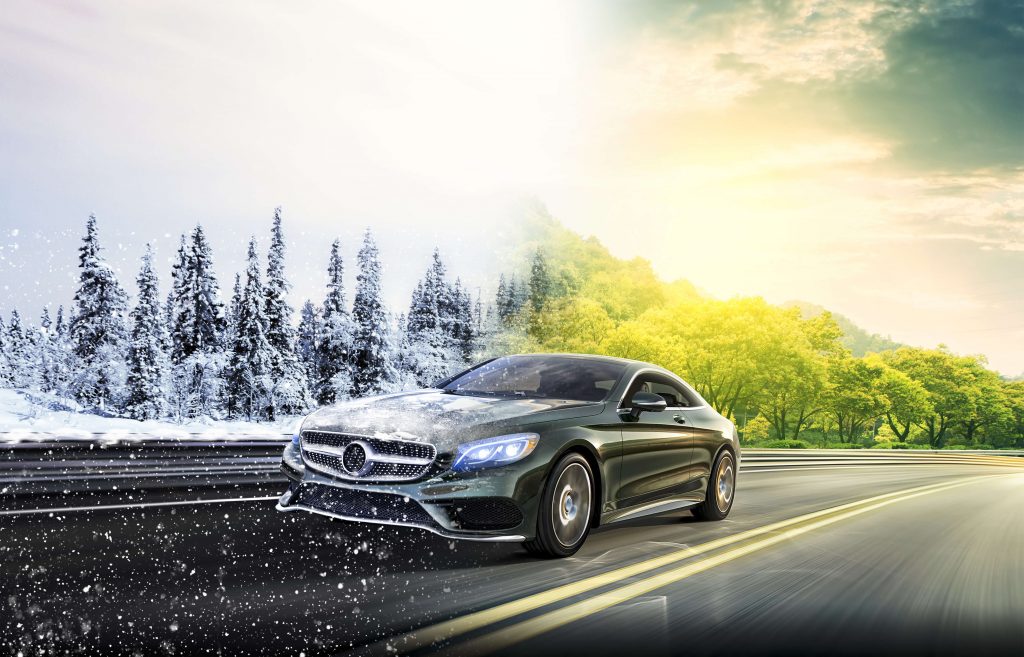
Many people are interested in rainy and snowy weather, but this condition can be a driver’s nightmare. One of the most common challenges while driving is weather conditions, for they can cause road accidents. Driving in rainy, snowy, and foggy conditions can bring about copious amounts of property damage. Many road and urban accidents happen due to rainy or snowy weather. Now, imagine AVs that have to drive in this situation. Self-driving cars, which are among the advanced technologies of the automotive industry and have passed many tests, may face problems in adverse weather conditions. In the following, we will discuss the effects of different weather conditions on the driving process while using AVs. So, stay tuned with “Dr.Parsa”.
Driving conditions affected by the weather
Safe driving is one of the most important elements when using a car. The importance of this case increases when you use an AV. Can this vehicle drive in heavy snow and rain if ice, water, or snow covers the road lanes and the traffic signs? At this time, how can sensors collect data?
AVs use sensors and cameras to recognize the path, but snow and rain can disrupt data collection. With snow and rain sitting on the glass of the cameras, it will be difficult for the cameras and sensors to recognize the path and objects. In this case, it becomes impossible to trust the driving via these cars because no accurate information is provided to the central computer to make a proper decision. On the other hand, some radars or lidars face limitations in unfavorable weather conditions, which deprives them of the ability to recognize road data.
Inclement weather can lead to a relative failure to detect sudden climate changes. As a result, there is a possibility of not finding the desired path in such situations. Even in some cases, the cold weather can cause disturbances in the functioning of the central systems. This is also one of the existing challenges.
Why is driving in snow difficult for self-driving cars?
Most AVs recognize their position on the road with the help of cameras that can easily become covered with snow, which reduces their efficiency. On the other hand, lidar accuracy also decreases in bad weather. Consequently, AVs will be blinded, which will make driving very difficult. There are other sensors such as audio sensors that can compensate for camera blindness, but snow and ice also affect them.
Does rain also play a role?
Rain is also an effective factor. It is possible to cause problems in observing objects. Existing sensors are automatically blocked by rain. In this case, reading the signs and road markings will be disturbed. Therefore, climate change should be considered one of the important obstacles in the development of autonomous vehicles.
Passengers no longer have to worry about adverse weather conditions
A vehicle must be able to drive in all conditions. So, Oxford University researchers are developing a new technology that can deal with the problems related to driving in bad weather conditions. This technology improves the performance of AVs in snow and rain. By installing this technology in autonomous vehicles, a high level of safety can be ensured while driving. This technology works in such a way that it penetrates the ground using GPR. It is then possible to map what is underground.
When the road is full of fog and it becomes difficult to distinguish the route, it is possible to check the surroundings. Indeed, by using GPR, soil elements can be checked and compared with a map that has already been made. Although this system has only been tested at low speeds and on certain roads, researchers believe that this system can be tested on highways and at various speeds.
In regards to this system, researchers have admitted that in rainy conditions we may not see proper performance of this technology due to the fact that when the weather is rainy, water seeps under the road and the road condition is not good. So, we cannot expect a good performance from the GPR system. To efface this shortcoming, it should be combined with some other technologies because the mentioned system cannot predict road risks.
Last word
In this article, we strived to explain the effects of unfavorable weather conditions while driving autonomous vehicles. This is one of the most common problems during driving. Snowy and rainy weather play a prominent role in this debate. So far, significant progress has been made in this field. It is expected that this problem will be solved in the coming years.